Grow retention, first steps
2Checkout offers a powerful collection of tools created to reduce your churn rate. Follow the path we set up for you to gain insight into our retention best practices, and start using the tools at your disposal.
WSDL
The Web Services Definition Language (WSDL) service description is available at: https://api.avangate.com/soap/4.0/?wsdl.
Integrate Shopify with 2CO ConvertPlus (by Verifone)
Overview
Integrate Shopify with the ConvertPlus ordering engine to be able to process payments through the 2Checkout platform in over 200 countries and more than 100 currencies.
This integration helps you provide a localized checkout experience and multiple payment methods, and it's optimized to convert more visitors into customers.
ConvertPlus is a full-stack solution that enables you to increase conversion rates with faster loading time and optimized flows. Download this solution brief to learn more!
Availability
Shopify integration is available only for 2Checkout accounts that handle their own tax and invoice management (2Sell and 2Subscribe).
If you already linked your 2Checkout account to your Shopify store using our legacy connector, you can switch to the new integration to benefit from the new ConvertPlus experience.
How to integrate Shopify with 2Checkout ConvertPlus (by Verifone)
Follow these steps to complete integration with Shopify:
-
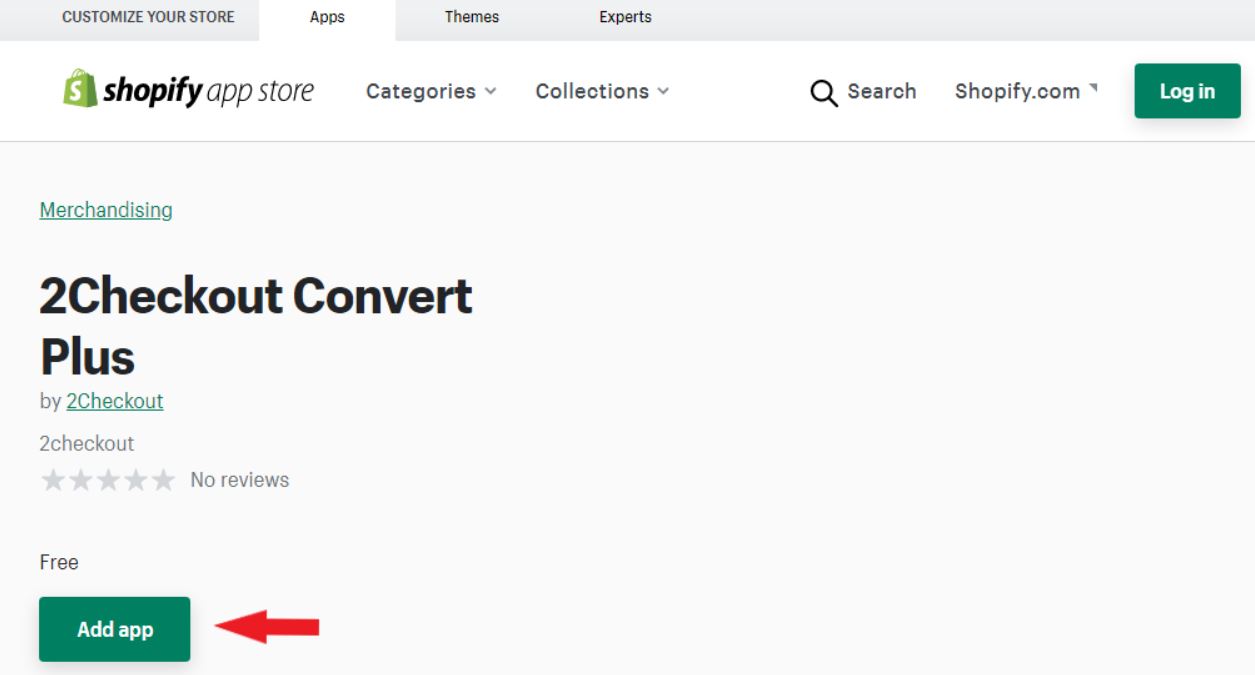
Install the 2Checkout ConvertPlus Connector from this URL.
-
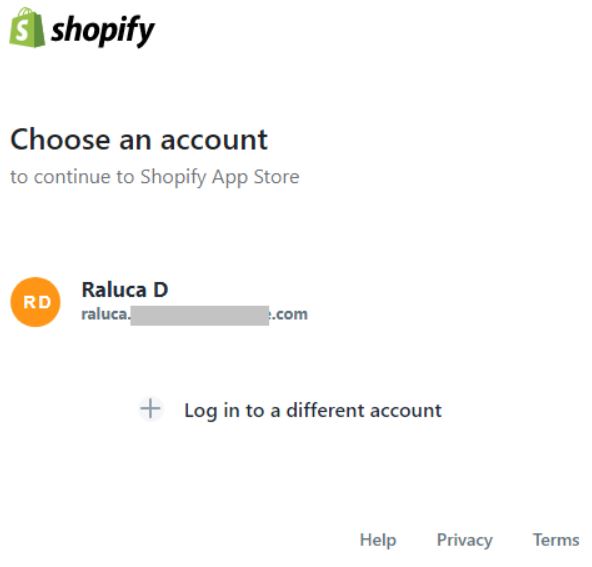
You will be prompted to log in to your Shopify account.
-
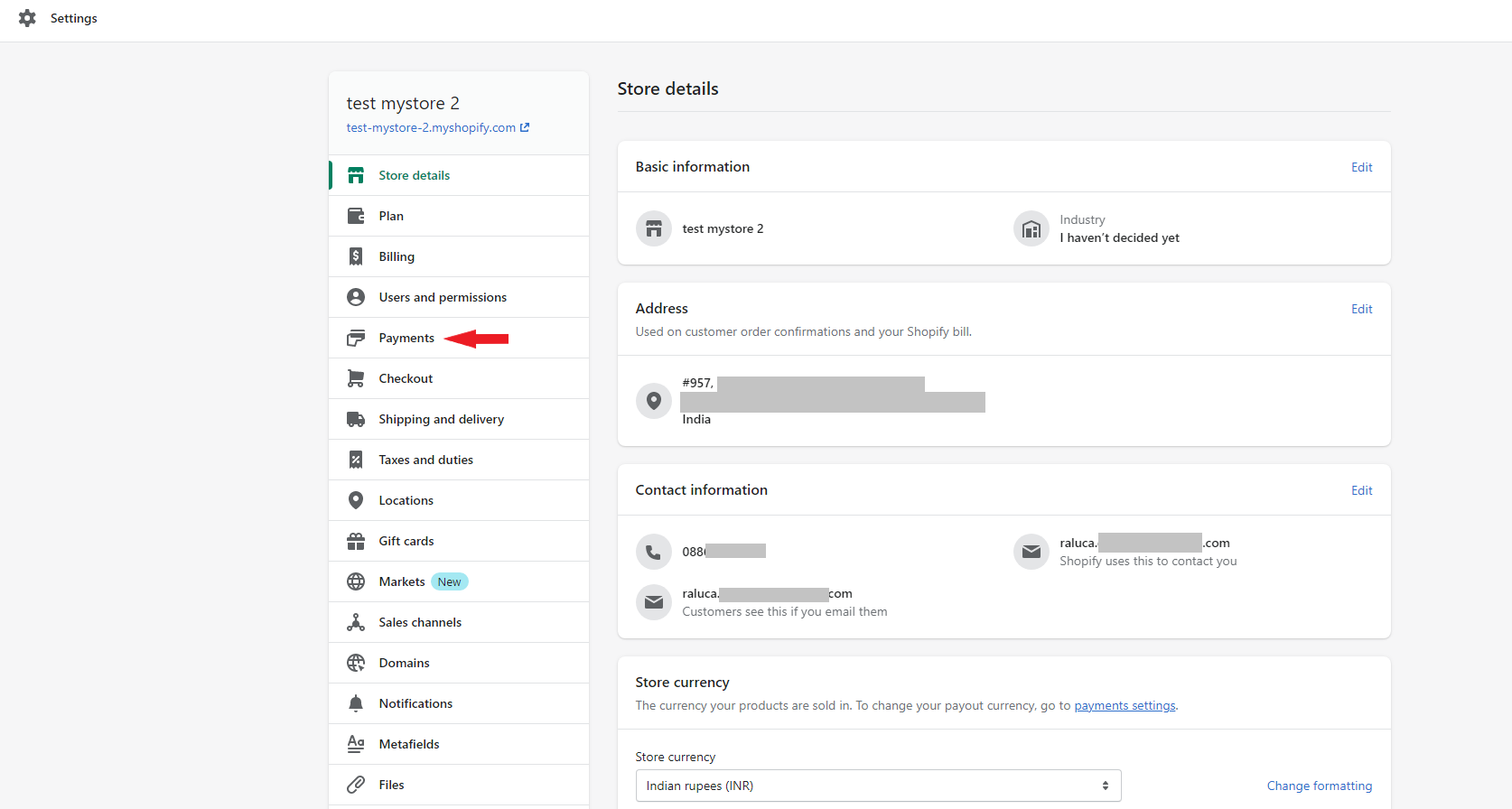
Once logged in your Shopify store, click on Payments.
-
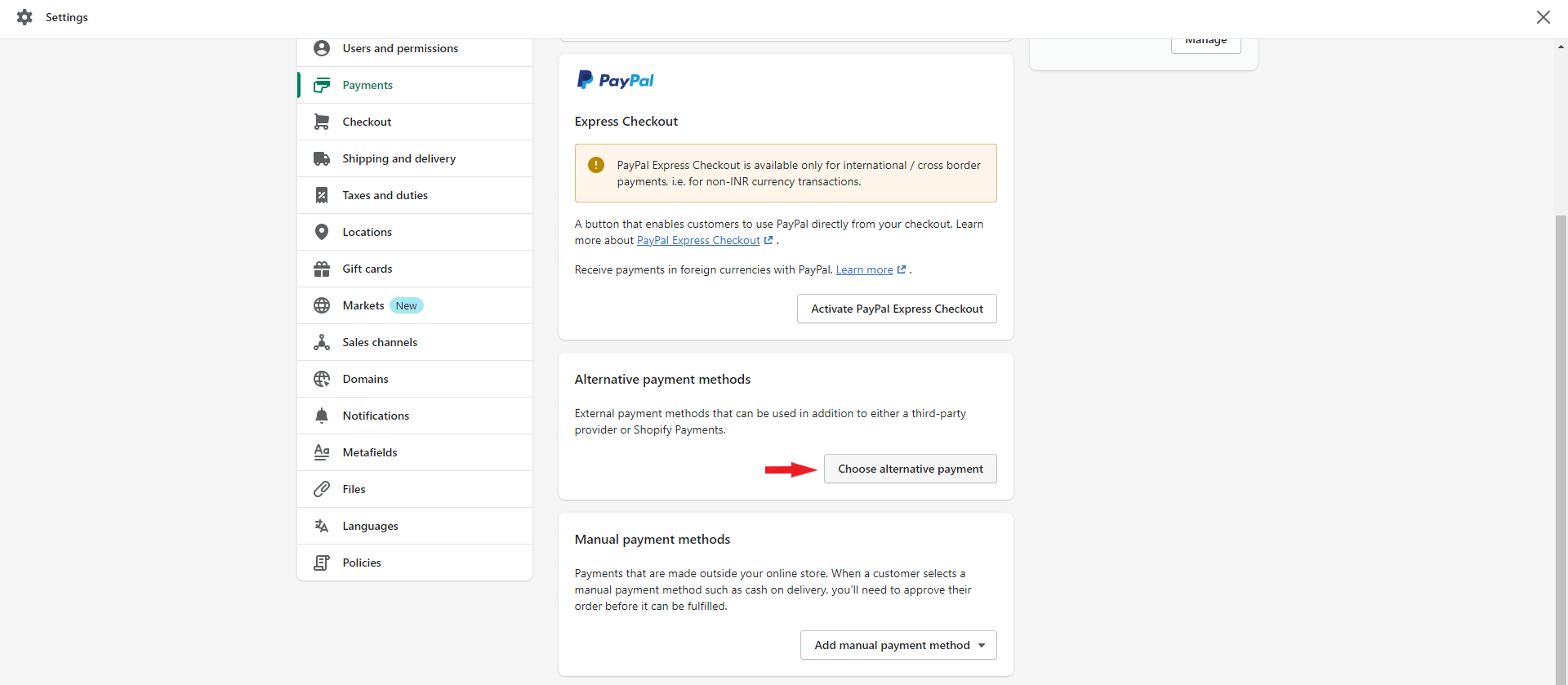
On the next page, click on Choose alternative payment.
-
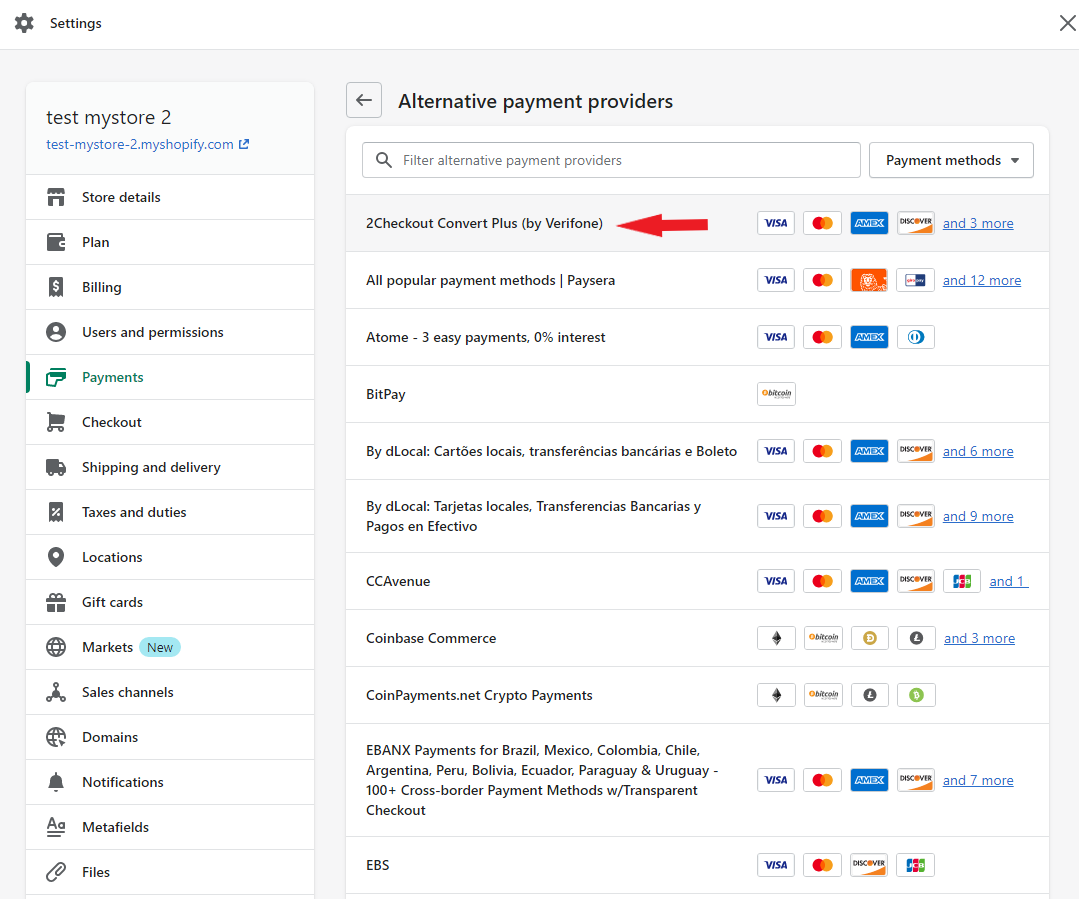
On the Alternative payment providers page, click on 2Checkout ConvertPlus (by Verifone).
-
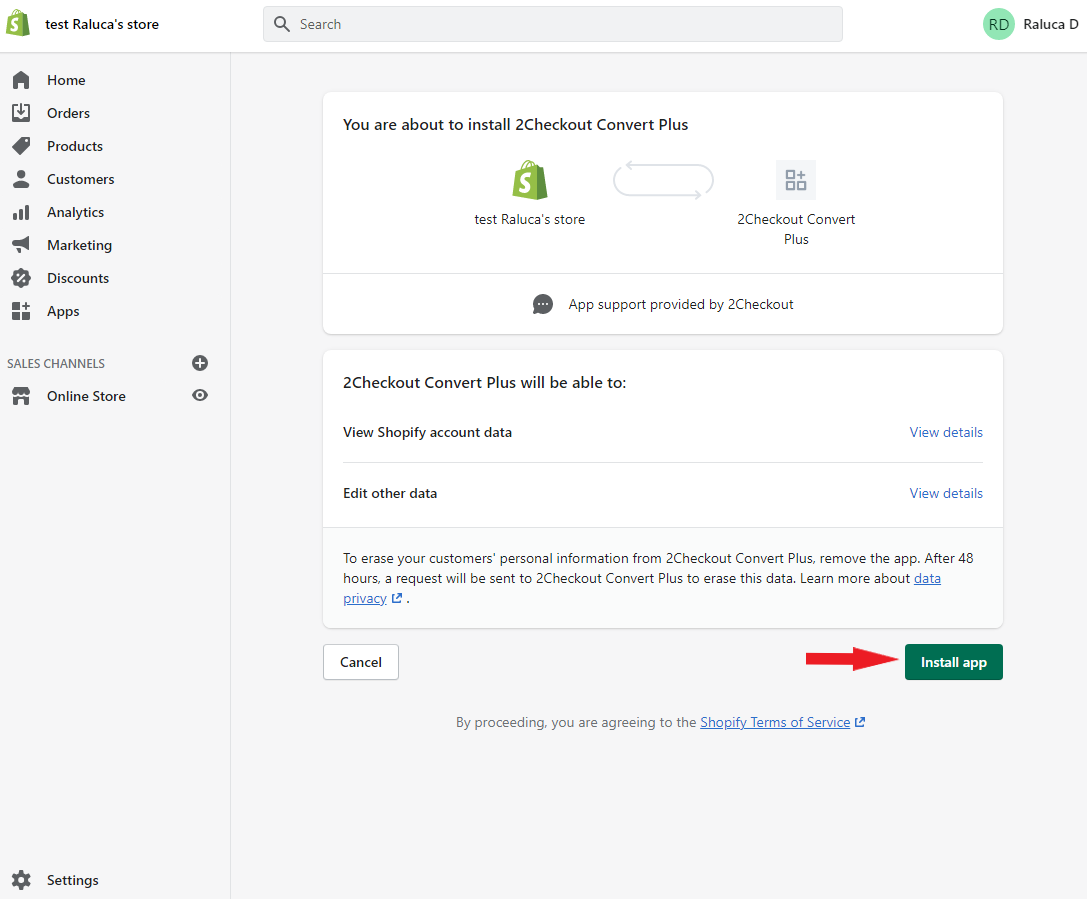
On the next page, install the 2Checkout ConvertPlus (by Verifone) plugin by clicking on Install app.
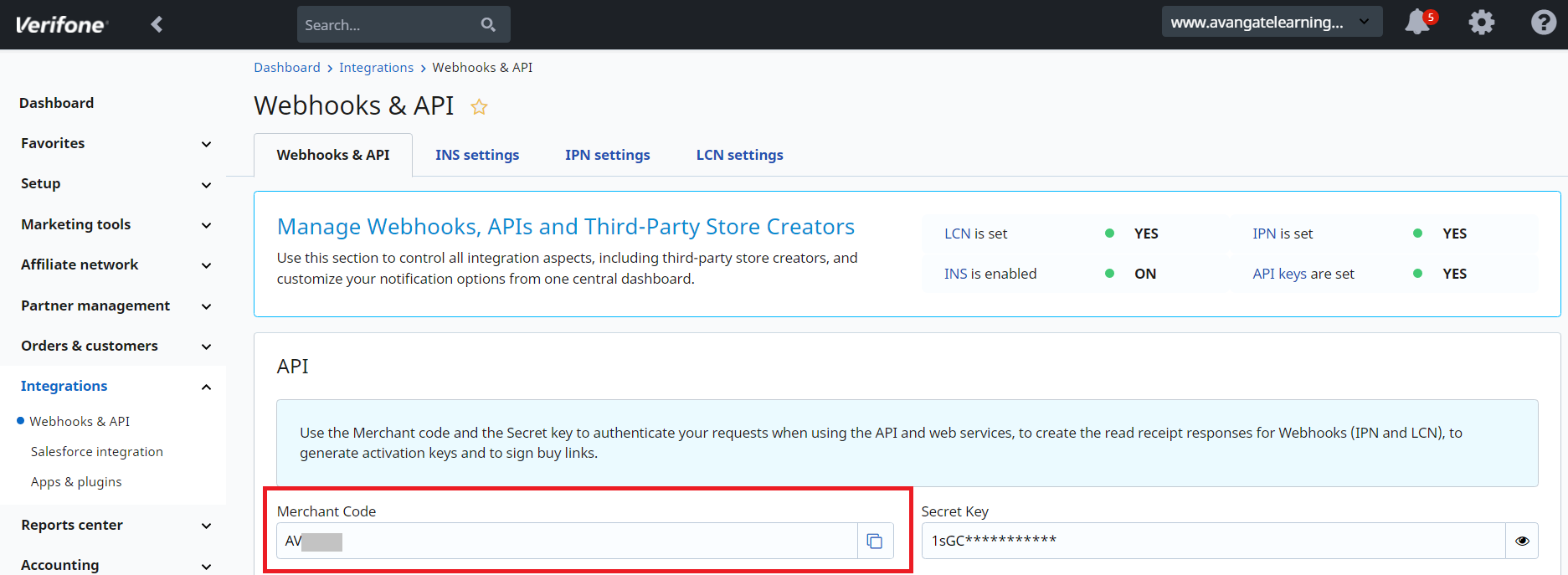
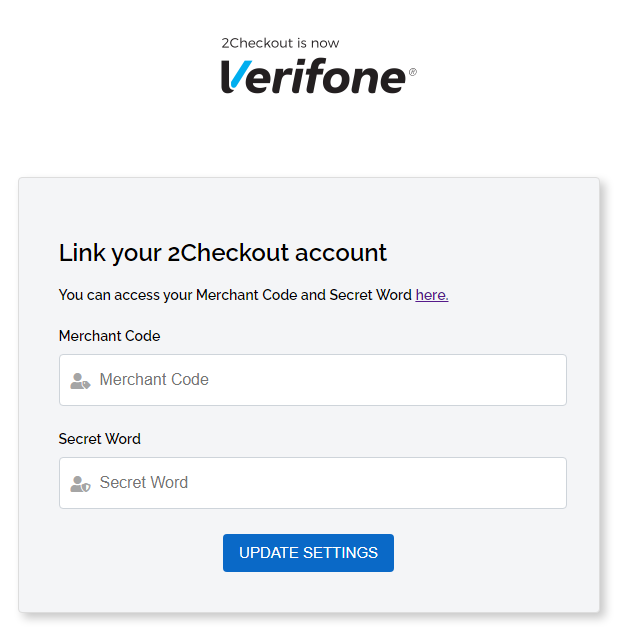
- In the next window, input your Merchant Code and your Secret Word. You can find these details by logging in to your 2Checkout Merchant Control Panel account and navigating to Integrations → Webhooks & API.
- Copy the Merchant Code in the API section and paste it in the corresponding field on your Shopify admin page.
- Go back to the 2Checkout Merchant Control Panel and scroll down to the Secret Word section. Check if the INS secret word and the buy-link secret word match. If they don't match, edit them to match each other.
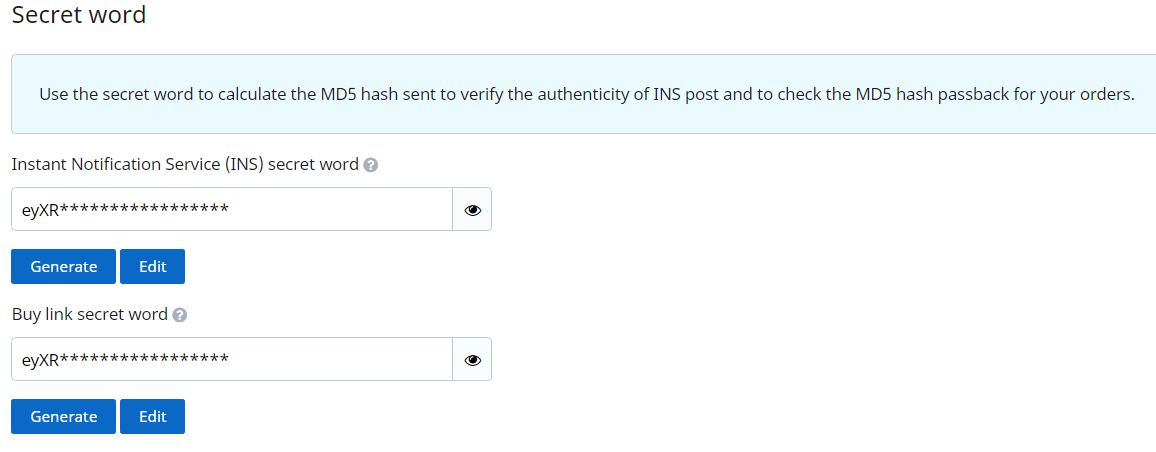
- Copy the buy-link secret word and paste it in the Secret Word field back in the Shopify admin page.
-
Activate the Redirect URL by checking the Enable return after sale checkbox in the Redirect URL section. Then click Update to save your changes.
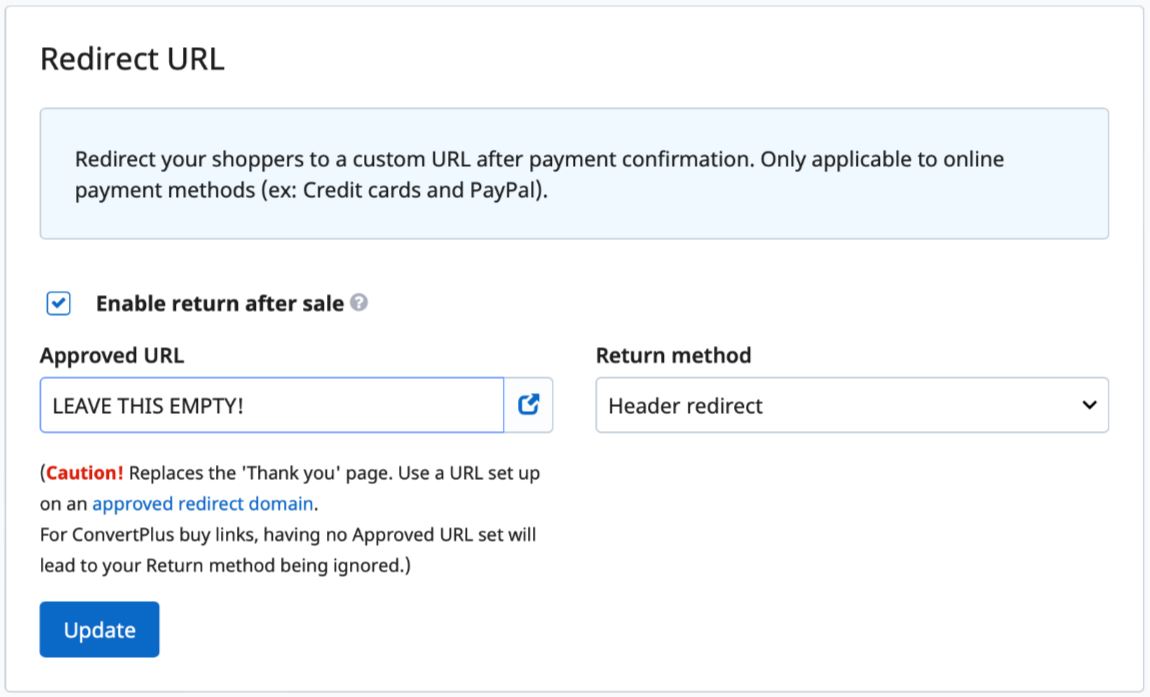
The Approved URL field should remain blank.
- Copy the Merchant Code in the API section and paste it in the corresponding field on your Shopify admin page.
-
Once you input your Merchant code and Secret word, click on Update settings.
-
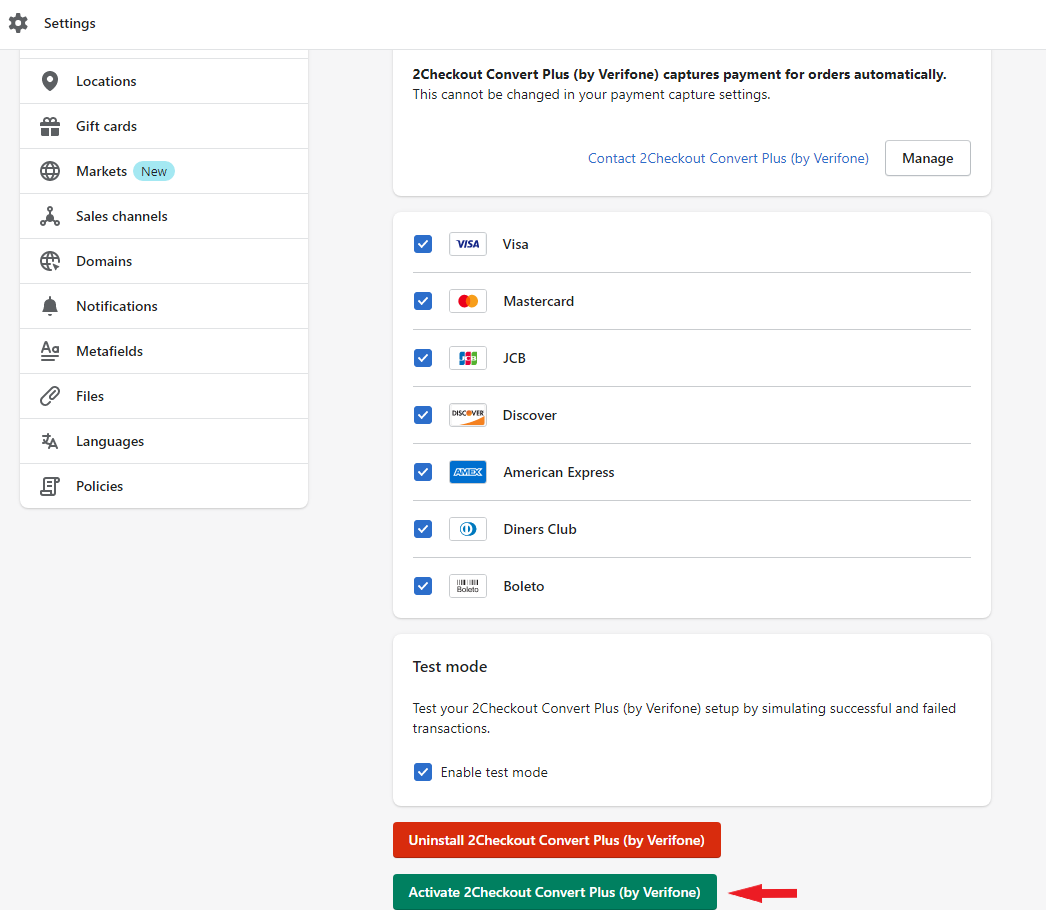
Once your integration with Verifone is complete, click on Activate 2Checkout ConvertPlus (by Verifone) to start processing payments with us.
-
Before activating the plugin, you can check the Enable test mode box for test transactions or leave unchecked for live transactions.
While in test mode, visitors coming to your website will not be able to place real orders, so do not forget to switch off this feature after doing a test in order to start accepting payments.
That's it! The 2Checkout Convert plus integration is enabled on your Shopify store. Go to your store to see it in action!
2. If any changes are made to your domain (to a custom Shopify domain/other), e-mail us the new URL at supportplus@2checkout.com in order to update your 2Checkout account, and thus avoid a communication mismatch. Currently, when you are using a third-party cart and want to have multiple URLs, you need to create a new account for each new URL.
About Shopify
Shopify is the Internet’s most elegant, simple, and affordable commerce platform aimed at providing businesses with easy to use e-commerce solutions, taking the challenge out of setting up and managing e-commerce storefronts. Shopify’s scalable and flexible full-featured platform enables any size business to efficiently launch and operate an online or in-store retail presence with ease.
Integrations with major shipping companies make shipping easier, while fulfillment services let Shopify store owners take the hassle out of inventory management and logistics. Shopify has an App Store (http://apps.shopify.com) which hosts a variety of apps to fill every need, ranging from accountancy services to shipping label printers, analytics to social media integration tools. The Theme Store (http://themes.shopify.com) features over 100 premium and free eCommerce templates.
In addition to powering your eCommerce website, Shopify also includes free, built-in mobile commerce shopping cart features so your customers can browse and buy from your store using their mobile phone. Shopify also includes a Mobile App so you can view all vital information about your shop from your iOS device, like checking your sales statistics, or viewing products, orders, and customer data.
To sign-up and receive 10% off, visit www.shopify.com.
F.A.Q.
1. How can I find out what type of account I have on the 2Checkout platform?
Read this article to find out information on how to find out the type of 2Checkout account you have.
Subscription
Overview
Use this section to handle the management of your subscriptions.
You can enable or disable your existing subscription, or choose to assign them to different customer entities.
Subscriptions can be retrieved starting with 5 minutes after their orders are generated in the 2Checkout system.
Authentication
Overview
Use the login method for the authentication process in the 2Checkout system.
Parameters
| Parameters | Type/Description |
|---|---|
| merchantCode | required (string) |
| Your merchant identifier (received from 2Checkout). | |
| date | required (string) |
| UTC ISO Date format (e.g. 2010-01-01 12:13:14) | |
| hash | required (string) |
| Calculated HMAC_SHA256 signature based on MerchantCode and Date, using your secret key (see example below). |
Response
| Parameter | Type/Description |
|---|---|
| sessionID | string |
| Session identifier string. An exception will be thrown if the values are incorrect. The sessionID expires in 10 minutes. |
Request
To create the HMAC_SHA256 source string use your merchant code (available here) and the date of the request, prefixing them with the length in bytes of each respective value, along with your account’s secret key (for UTF-8 characters the length in bytes might be longer than the string length). For example:
| Parameters | Type/Description |
|---|---|
| merchantCode | Avangate |
|
8AVANGATE
|
|
| date | 2010-05-13 12:12:12 |
|
192010-05-13 12:12:12
|
|
| HMAC source string |
8AVANGATE192010-05-13 12:12:12
|
| Secret key | SECRET_KEY |
| Calculated HMAC_SHA256 signature based on MerchantCode and Date, using your secret key: | |
| bf763db7d333e9c3038698cf59ada3e6 | |
Request Example
<?php
$host = "https://api.avangate.com/channel-manager";
$merchantCode = "YOUR_MERCHANT_CODE";// your account's merchant code available in the 'System settings' area of the Control Panel: https://secure.2checkout.com/cpanel/account_settings.php
$key = "YOUR_SECRET_KEY";// your account's secret key available in the 'System settings' area of the Control Panel: https://secure.2checkout.com/cpanel/account_settings.php
$algo = "sha256";
$now = date('Y-m-d H:i:s'); //date_default_timezone_set('UTC')
$string = strlen($merchantCode) . $merchantCode . strlen($now) . $now;
$hash = hash_hmac($algo, $string, $key);
try {
$client = new SoapClient($host . "/2.1/soap/?wsdl", [
'location' => $host . "/2.1/soap/",
"stream_context" => stream_context_create([
'ssl' => [
'verify_peer' => false,
'verify_peer_name' => false
]
])
]);
$sessionID = $client->login($merchantCode, $now, $hash, $algo);
echo("Token: {$sessionID}" . PHP_EOL);
} catch (SoapFault $e) {
echo("Error: {$e->getMessage()}" . PHP_EOL);
}
?>
Errors
| Error | Description |
|---|---|
| AUTHENTICATION_FAILED | Authentication failed |
| FORBIDDEN | Forbidden area |
Product SKU
Overview
Stock keeping unit or SKU is a number assigned to a particular product by a digital or physical retail store for easy identification and inventory tracking purposes. The SKU number is a string of alphanumeric characters that uniquely identify details such as price, product options, and manufacturer of a particular product or service. SKUs are used in order notifications, electronic delivery, export files, etc.
SKU Management
For companies that manage large product catalogs with defined SKUs and that make regular changes to their prices and products (new versions, new options), the manual process performed in the Merchant Control Panel needs to be supported by an automatic solution as well. By using an automated flow, merchants decrease the time needed for this process, and also reduce the risk of human errors associated with the manual process.
In the 2Checkout platform, SKUs can be associated with a unique combination made up of:
- Product identification element
- Pricing configuration
- Plus minimum one of the following:
- Currency – defined as applicable to all currencies or only to specific ones
- Volume Discounts – defined as specific quantity or intervals (applicable only according to the volume discounts that are defined at pricing configuration level)
- Purchase Types – possible values: new purchase, renewal, upgrade, and trial
- Pricing Options – will be available considering the pricing option groups assigned to the selected pricing configuration
Shipping price
Overview
The object below is returned directly or within a successful response from the following API requests:
Retrieve shipping price
Shipping price object
| Parameters | Type/Description | ||
|---|---|---|---|
| Shipping prices available |
Array of objects Details below |
||
| Name | String | ||
| Name of the shipping method available for the cart configuration. | |||
| Code | String | ||
| System-generated identified assigned to the shipping method. | |||
| TrackingURL | String | ||
| Tracking URL defined at shipping method leve. | |||
| Currency | String | ||
| Currency in which shipping prices are expressed. | |||
| PriceDetails | Object | ||
| Details below. | |||
| Net | Object | ||
| Shipping price for a NET price configuration. | |||
| TotalAmount | Int | ||
| Total shipping price charged from customers for a cart configuration. | |||
| BasePrice | Int | ||
| Shipping method base price amount. | |||
| OverweightAmount | Int | ||
| Overweight amount applied to the purchase. | |||
| CountrySurcharge | Int | ||
| Surcharge applied based on customer delivery country. | |||
| WeightSurcharge | Int | ||
| Surcharged applied based on total order weight. | |||
| OrderSurcharge | Int | ||
| Surcharged applied based on total order amount. | |||
| Gross | Object | ||
| Shipping price for a GROSS price configuration. | |||
| TotalAmount | Int | ||
| Total shipping price charged from customers for a cart configuration. | |||
| BasePrice | Int | ||
| Shipping method base price amount. | |||
| OverweightAmount | Int | ||
| Overweight amount applied to the purchase. | |||
| CountrySurcharge | Int | ||
| Surcharge applied based on customer delivery country. | |||
| WeightSurcharge | Int | ||
| Surcharged applied based on total order weight. | |||
| OrderSurcharge | Int | ||
| Surcharged applied based on total order amount. | |||
Order field
Overview
Use this object to retrieve information about additional order/product fields.
Parameters
| AdditionalField | Object |
|---|---|
|
Label |
String |
|
|
Field text. |
|
Code |
String |
|
|
Field identifier. Alpha-numeric chars, underscores and dashes. |
|
Type |
String |
|
|
Field type:
|
|
ApplyTo |
Sting |
|
|
|
|
Values |
Array of values |
|
|
Custom values you control. |
|
ValidationRule |
String |
|
|
The validation rule restricting the type of information shoppers can enter in the additional field during the purchase process. |
|
Translations |
Array of objects |
|
|
Details below. |
| Translation | Object |
|---|---|
|
Label |
String |
|
|
Field text translated in the language of the Translations object. |
|
Values |
Object |
|
|
Custom values you control translated in the language of the Translations object. |
|
Language |
String |
|
|
ISO language code. (ISO 639-1 two-letter code). |